Introduction
Every business today wants one thing from its mobile app: to reach the maximum number of users with the least amount of development time and cost. That is exactly why Flutter app development services have become the go-to choice for startups, enterprises, and agencies alike. Flutter, Google's open-source UI toolkit, allows a single codebase to power apps on Android, iOS, web, and desktop, all while delivering near-native performance and pixel-perfect design.
Whether you are a founder trying to launch your first MVP, a product manager scaling an existing platform, or an enterprise looking to modernize legacy systems, understanding what Flutter app development services actually include and how to choose the right partner can save you months of rework and thousands of dollars in wasted spend. This guide breaks down everything you need to know: what these services cover, why they matter, how the development process works, and how to evaluate a provider before you sign a contract.
Key Takeaways
- Flutter app development services cover the full app lifecycle strategy, UI/UX design, development, QA, deployment, and post-launch support.
- A single Flutter codebase can target Android, iOS, web, and desktop, cutting development time by up to 40-50%.
- Flutter's widget-based architecture makes it ideal for pixel-perfect, highly customized interfaces.
- Choosing the right service provider depends on portfolio, technical depth, communication process, and post-launch support.
- Flutter is backed by Google and a large open-source community, ensuring long-term stability and continuous improvement.
What Are Flutter App Development Services?
Flutter app development services refer to the end-to-end process of designing, building, testing, and maintaining applications using the Flutter framework and the Dart programming language. These services are typically offered by dedicated Flutter app development companies or independent Flutter developers for hire, and they usually include:
- Discovery and consulting – requirement gathering, feasibility studies, and technical architecture planning
- UI/UX design – wireframes, prototypes, and design systems tailored to Flutter's widget library
- Cross-platform development – building the app once and deploying it across multiple platforms
- API and backend integration – connecting the app to databases, third-party services, and cloud infrastructure
- Quality assurance and testing – automated and manual testing across devices and OS versions
- App store deployment – publishing to the Apple App Store and Google Play Store
- Maintenance and support – bug fixes, OS updates, feature additions, and performance monitoring
Why Businesses Are Choosing Flutter
1. Single Codebase, Multiple Platforms
Instead of maintaining separate Swift and Kotlin codebases, Flutter lets teams write once and deploy everywhere. This drastically reduces development and maintenance overhead, which is a major reason cross platform app development with Flutter has overtaken many older hybrid frameworks.
2. Faster Time-to-Market
Because Flutter development services can build for multiple platforms simultaneously, businesses often launch 30-40% faster than they would with separate native teams. This speed advantage matters enormously for startups racing to validate an idea before funding runs out.
3. Native-Like Performance
Flutter compiles directly to native ARM code, so apps run smoothly with minimal lag, even for graphics-heavy or animation-rich interfaces.
4. Cost Efficiency
A single development team working on one codebase is naturally cheaper than hiring separate iOS and Android teams. This is one of the biggest reasons companies actively search to hire Flutter app developer talent instead of building two parallel native teams.
5. Strong Community and Google Backing
Flutter is maintained by Google and supported by an active global community, which means continuous updates, a rich plugin ecosystem, and long-term viability for enterprise projects.
The Flutter App Development Process
A professional Flutter app development company typically follows a structured process:
- Requirement Analysis – Understanding business goals, target users, and technical constraints
- UI/UX Design – Creating wireframes and interactive prototypes using tools like Figma
- Sprint-Based Development – Building features iteratively using Agile methodology
- Continuous Testing – Running unit, widget, and integration tests throughout development
- Client Review Cycles – Regular demos and feedback loops to keep stakeholders aligned
- Deployment – Publishing to app stores with proper metadata, screenshots, and compliance checks
- Post-Launch Support – Monitoring crash reports, performance metrics, and user feedback
How to Choose the Right Flutter App Development Partner
Not all Flutter app development services are created equal. Here's what to evaluate before committing:
- Portfolio and case studies – Look for apps similar in complexity to yours
- Technical expertise – Ask about state management approaches (Provider, Riverpod, BLoC), backend integrations, and third-party SDK experience
- Communication process – Weekly standups, shared project boards, and transparent reporting matter more than they seem
- Post-launch support model – Does the provider offer maintenance packages or only one-time delivery?
- Client reviews and references – Direct conversations with past clients often reveal more than a polished sales pitch
Common Use Cases for Flutter Development
- E-commerce apps – Fast, animation-rich shopping experiences
- Fintech apps – Secure, high-performance apps with complex data visualization
- On-demand service apps – Ride-hailing, delivery, and booking platforms
- Healthcare apps – Telemedicine, appointment scheduling, and patient portals
- Enterprise internal tools – Dashboards, inventory systems, and workforce management apps
Cost Factors to Consider
The cost of Flutter app development services depends on several variables:
- App complexity (basic MVP vs. feature-rich enterprise app)
- Design requirements (standard UI kit vs. fully custom design system)
- Backend and third-party integrations
- Geographic location of the development team
- Ongoing maintenance and support needs
Businesses working with offshore or nearshore teams often find significant savings without compromising quality, provided the provider has a proven Flutter track record.
Conclusion
Flutter app development services have reshaped how businesses think about mobile strategy. Instead of choosing between platforms, companies can now build once and reach users everywhere faster, cheaper, and without sacrificing performance or design quality. Whether you're launching a new product or modernizing an existing app, partnering with an experienced Flutter team can be the difference between a smooth launch and a costly, drawn-out development cycle. The key is doing your homework: review portfolios, ask the right technical questions, and choose a partner who treats your app as more than just a line item.
FAQs
1. How long does it take to build a Flutter app?
A simple MVP can take 6-10 weeks, while a feature-rich enterprise app may take 4-6 months, depending on complexity and integrations.
2. Is Flutter suitable for large-scale enterprise apps?
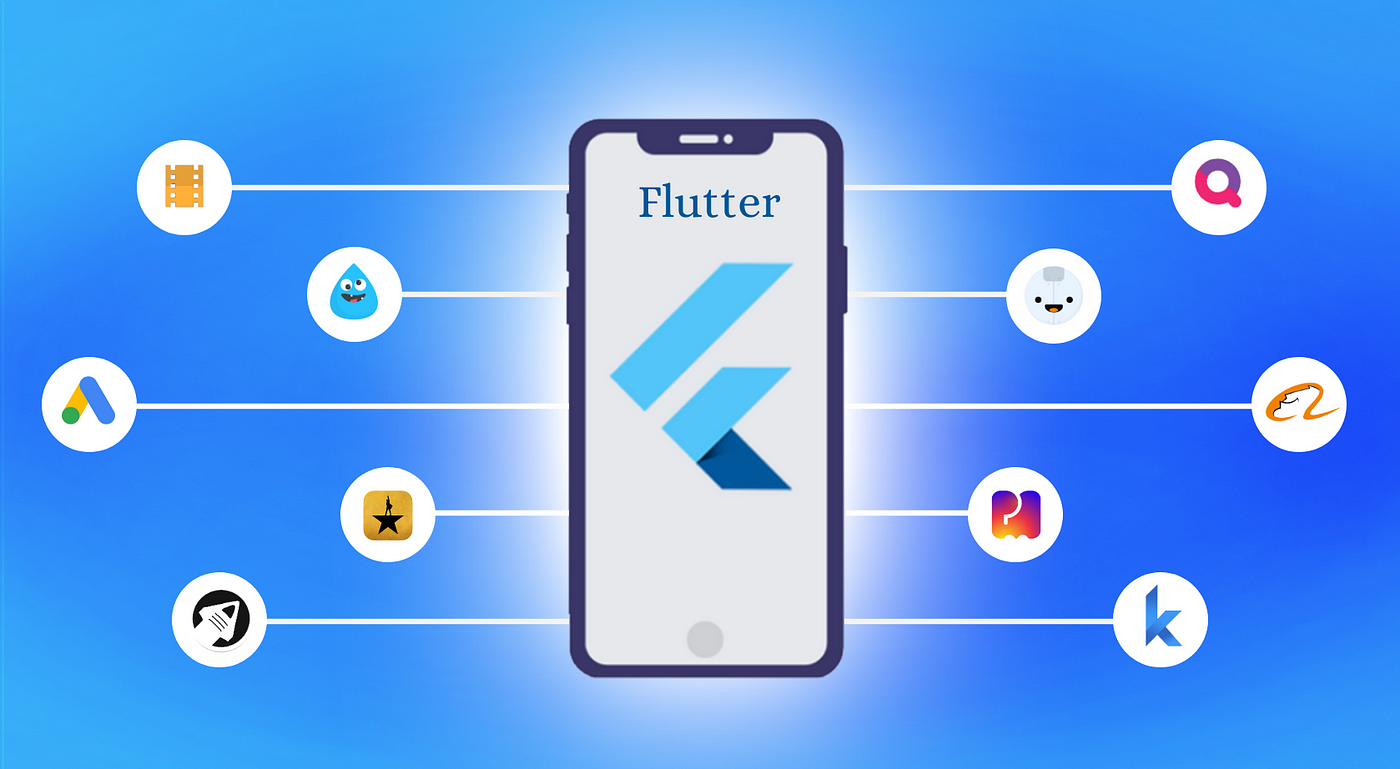
Yes. Companies like BMW, eBay, and Alibaba use Flutter for production apps, proving it scales well for complex, high-traffic applications.
3. Do Flutter apps look and feel native?
Yes. Flutter renders its own widgets rather than relying on platform-specific components, giving developers precise control over look and feel while maintaining native-like performance.
4. Can an existing native app be migrated to Flutter?
Yes, though migration complexity depends on the app's architecture. Many Flutter app development companies offer dedicated migration assessments and phased rewrite strategies.
5. What ongoing support should I expect after launch?
Reputable providers typically offer maintenance packages covering bug fixes, OS compatibility updates, performance monitoring, and minor feature enhancements.